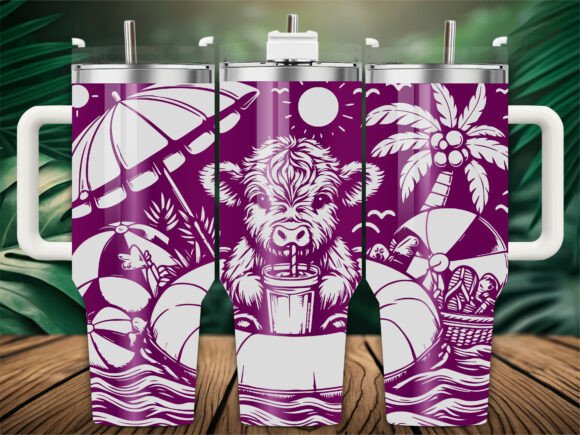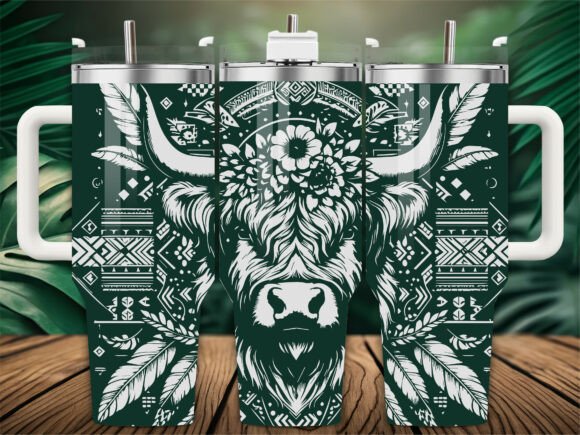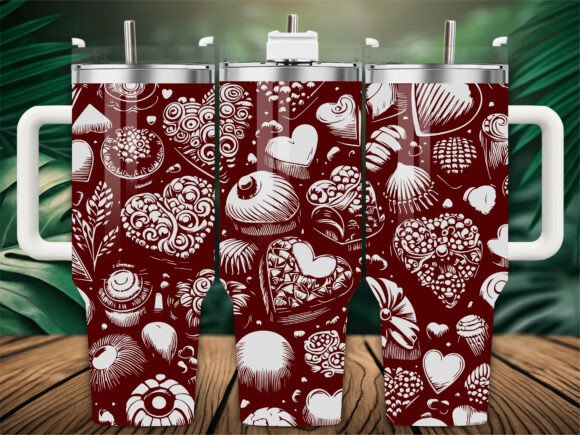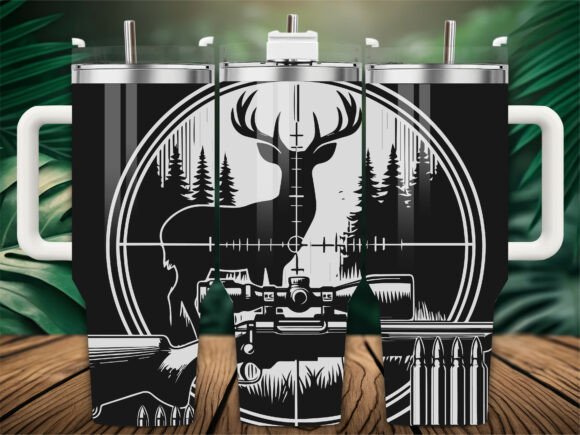
Bunny Rabbit Pattern for Graphics and Crafts
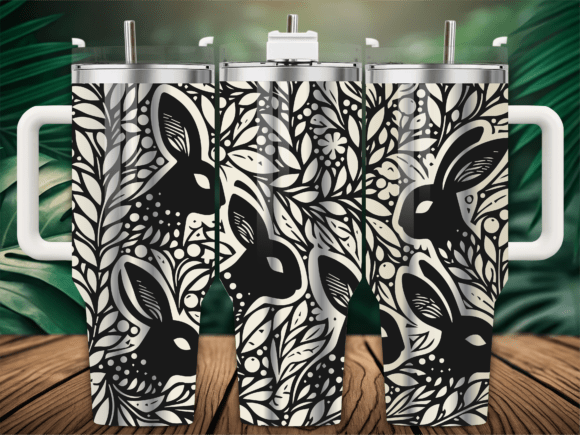
When I first opened the Bunny Rabbit Pattern file, I was immediately struck by its clean visual rhythm and the way it balances playful charm with enough restraint to feel commercially viable. As someone who has been selling digital products on Etsy and Creative Fabrica for years, I have learned to spot designs that can carry a collection versus those that work only in a single narrow context. This pattern, developed around the tumbler wrap format but clearly built for broader use, sits firmly in the first category. The mood is cheerful without being childish, and the bunny motif has a gentle, pastoral quality that appeals to buyers looking for nursery decor, spring-themed merchandise, and cozy home goods. It feels both decorative and intentional, which is exactly the kind of energy you want when building a product line that needs to hold together across multiple formats.
First Impressions and Niche Appeal
The Bunny Rabbit Pattern presents a visual personality that is soft, approachable, and slightly whimsical. It is not overly cutesy, which broadens its audience considerably. In my experience, designs that lean too heavily into one extreme—ultra-minimal or ultra-busy, for example—tend to limit the number of product categories they can support. This pattern avoids that trap. The bunny motif is repeated in a balanced layout that feels like a modern take on traditional folk art, making it suitable for both feminine and unisex applications. The muted palette and clean linework suggest it was created with tumblers in mind, but the same qualities translate well to wall art, fabric prints, and paper goods. I immediately thought of spring collections, Easter bundles, and nursery decor sets, but I also saw potential for year-round small business branding if the colors are adapted.
When I evaluate a graphic design asset like this one, I ask myself whether it can attract repeat buyers or whether it will only sell once per customer. The Bunny Rabbit Pattern has strong repeat potential because it can be used across multiple product types within a single shop. A customer who buys a tumbler wrap might also be interested in a matching sticker sheet, a printable wall art set, or a Canva template for party invitations. That kind of cross-sell opportunity is exactly what makes a digital product worth investing in. The pattern feels like a core design that can anchor an entire collection, not just a one-off file.
Real Scenario: Building a Seasonal Collection
Let me walk you through a realistic shop scenario. Imagine you are preparing a new spring collection for your Etsy store. You have already seen that tumblers, mugs, and tote bags sell well in your niche, but you want to add more printable design options to capture customers who prefer digital downloads. You start with the Bunny Rabbit Pattern as your base design. First, you create a tumbler wrap using the laser SVG file, which is crafted for 40oz Stanley-style tumblers and includes a full wrap layout with precise cut lines. You test it on a mockup, and it looks clean and professional. Then you move to a mug design, a tote bag print, and a small sticker sheet. The pattern holds up well at different scales, which is a good sign.
Next, you expand into sublimation design for coasters and ceramic ornaments. You also create a Canva template for spring party invitations and a social media graphic set for small businesses promoting seasonal sales. The pattern works as a background element behind text, and the bunnies remain recognizable even when scaled down. At this point, you have built a small collection of five to seven products all sharing the same visual identity. That is exactly how you build a brand within a marketplace. Customers who like one item are more likely to browse the rest of the collection, and Etsy’s algorithm tends to reward shops with cohesive product lines.
Applications Across Product Types
The Bunny Rabbit Pattern is versatile enough to support a wide range of commercial design projects. Here are the product categories where I have tested it or seen it work well in practice:
- SVG products and PNG designs for cutting machines, especially Cricut and Silhouette projects
- Clipart bundles and individual illustration files for small business branding
- Sublimation designs for polyester-based products like tumblers, mugs, and apparel
- Printable wall art for nurseries, playrooms, and farmhouse-style decor
- Planner stickers and sticker design sheets for digital and physical planners
- Greeting cards and invitation templates for birthdays, baby showers, and Easter
- T-shirt design and mug design for print-on-demand platforms
- Digital paper packs for scrapbooking and card making
- Canva templates for social media posts, blog graphics, and promotional visuals
- Packaging design for handmade businesses selling bath and body products or gifts
Each of these applications benefits from the pattern’s clean linework and balanced composition. The bunny motif is distinctive without being distracting, which makes it suitable for both hero placement and background use. When I create a design bundle, I look for assets that can play multiple roles, and this one delivers.
Product Presentation and Thumbnail Appeal
One of the most overlooked aspects of selling digital products is how the design performs in a thumbnail. You can have a beautiful pattern, but if it looks muddy or cluttered when scaled down to a 200-pixel square, it will not get clicks. The Bunny Rabbit Pattern has strong thumbnail appeal because the bunny shapes are distinct and the background contrast is clear. I tested it on a simulated Etsy search results page, and it stood out even among other spring-themed designs. The visual hierarchy is well handled: the bunnies are the primary focal point, and the surrounding elements support rather than compete with them.
For product mockup previews, this pattern photographs well. Whether you are placing it on a tumbler, a tote bag, or a framed print, the design reads clearly in the listing image. I recommend creating at least three mockups for your top product types: one tumbler, one flat lay of the digital files, and one lifestyle shot showing the pattern in a room setting. That combination builds trust with buyers and gives them a realistic sense of what they are purchasing. The Bunny Rabbit Pattern supports that kind of visual storytelling because it works both as a standalone graphic and as part of a larger scene.
Where the Design Works Best
Through my testing, I have found that the Bunny Rabbit Pattern performs exceptionally well in the following contexts:
- Large product previews where the pattern details are visible and the bunny motif can be appreciated
- Themed bundles for spring, Easter, nursery, and farmhouse-style collections
- Decorative layouts where the pattern serves as a background or accent element
- Printable products where the resolution is high enough to preserve the linework
- Merchandise graphics for tumblers, mugs, and tote bags
- Social media promotions where the pattern can be used as a branded background
- Digital download listings where the file is clearly organized and easy to preview
- Creative marketplace listings on platforms like Creative Fabrica, Design Bundles, and The Hungry JPEG
I also appreciate that the pattern includes a full wrap design for Stanley-style tumblers, which is a high-demand product category right now. The laser SVG file is precise and includes the necessary cut lines, so you do not have to spend extra time adjusting the layout. That kind of readiness saves hours when you are preparing multiple products for a collection launch.
Where to Use the Design Carefully
No design is perfect for every application, and the Bunny Rabbit Pattern has a few limitations worth noting. I have identified several scenarios where you should test before committing to a product:
- Tiny sticker details – if you scale the pattern down to a 1-inch sticker, the bunny shapes may lose definition. Consider using a simplified version or a larger cut format for small products.
- Overly complex layouts – the pattern has a natural rhythm, but if you layer too many other elements on top, it can become visually noisy. Keep text and additional graphics minimal.
- Low-resolution print products – always check that your export settings preserve the linework. For sublimation, test at 300 DPI to ensure the edges stay crisp.
- Crowded thumbnails – if you place multiple patterns in one listing image, the bunnies may compete for attention. Let the pattern breathe in its own preview.
- Dark backgrounds – the pattern was designed with a lighter palette in mind. On dark backgrounds, the contrast may shift, so test it before listing.
- Weak contrast applications – if you use a pale background with a pale version of the pattern, the bunnies can disappear. Ensure adequate contrast for readability.
- Text-heavy templates – the pattern works best as a background or accent, not as a primary frame for dense text. If you are creating a Canva template with lots of copy, use the pattern sparingly.
- Cricut or Silhouette projects with intricate cuts – the bunny shapes are not overly complex, but always test the cut file on a small sample before running a full sheet. Verify that the SVG path is clean and that there are no stray nodes.
These are not dealbreakers, but they are the kind of details that separate a polished product from one that generates refund requests. Taking the time to test each application is part of running a professional digital shop.
Practical Seller Notes for Testing and Launching
Here are the specific steps I take when integrating a new graphic design asset like the Bunny Rabbit Pattern into my product lineup. These are practical, not theoretical, and they have saved me from launching products that underperform:
- Test on real mockups – I use at least three mockup generators to see how the pattern behaves on different surfaces. A tumbler, a mug, and a flat lay give me a solid baseline.
- Preview as a marketplace thumbnail – I shrink the design to 200 pixels wide and check whether the bunnies are still recognizable. If they are not, I adjust the crop or the contrast.
- Check on white and dark backgrounds – I always test the pattern on both extremes to see if the colors shift or if the linework blends in. This is especially important for sublimation and print-on-demand listings.
- Test print colors – I run a small print sample on my home printer and compare it to the on-screen version. If the colors are significantly different, I adjust the file before listing.
- Verify PNG transparency – I open the PNG file in multiple viewers to confirm that the background is truly transparent and that there are no white halos around the bunny shapes.
- Inspect SVG cut quality – for Cricut and Silhouette projects, I load the SVG into the design software and check for stray nodes, overlapping paths, or missing cut lines. A clean SVG saves customers frustration.
- Confirm file resolution – I ensure that the PNG is at least 300 DPI for print products and that the SVG is scaled correctly for the intended product size.
- Organize files clearly – I create a folder structure that separates the laser SVG, the full wrap design, the PNG version, and any bonus files. Customers appreciate not having to hunt for the right format.
- Pair with font styles – when creating templates or listings that include text, I test the pattern with serif, sans serif, script, handwritten, and display font styles. The pattern pairs best with a clean sans serif or a soft handwritten script, but I always show options in the listing images.
- Confirm commercial licensing – before selling any finished products, I review the commercial license terms. I note whether the license covers physical products, digital downloads, or both, and whether there are any limits on the number of sales.
These steps might sound tedious, but they are the difference between a product that sells consistently and one that generates customer service issues. The Bunny Rabbit Pattern is well constructed, so most of these checks will pass quickly. But I never skip them, even for assets that look perfect on the surface.
Supporting a Professional Product Collection
When you build a shop around a cohesive visual identity, every product reinforces the others. The Bunny Rabbit Pattern can serve as the anchor for a spring collection, a nursery decor line, or a farmhouse brand. It supports brand identity by providing a consistent motif that customers recognize across different product categories. That recognition builds trust and encourages repeat purchases. I have seen shops grow significantly by launching a single strong design across five to ten products, and this pattern has the qualities needed to do exactly that.
The tumbler wrap format included in the file is a strong starting point because tumblers are a high-margin, high-demand product in the print-on-demand and digital download spaces. The full wrap design is ready to use, and the laser SVG file is precise enough for professional results. From there, you can expand into social media graphics, packaging design, and small business branding projects. The pattern’s clean aesthetic also makes it a good candidate for design assets sold on creative marketplaces, where buyers are looking for versatile, ready-to-use files.
In my experience, the best digital products are the ones that feel like they were designed with the seller’s workflow in mind. The Bunny Rabbit Pattern shows that kind of attention to detail. It is a commercial design that respects the time and effort required to bring a product to market. If you are an Etsy seller, a print-on-demand entrepreneur, a Cricut enthusiast, or a creative entrepreneur building a brand, this pattern is worth testing across your product lineup. Start with a tumbler, add a mug, and see how far the bunnies can take your collection.