Moon Dreamcatcher: Real Talk from a Design Reviewer
When I first opened the Moon Dreamcatcher design file, I was immediately struck by its mood. There is a quiet, celestial feel to the layout—half moon shapes, woven web details, and flowing feathers that suggest movement without clutter. As someone who has tested hundreds of embroidery files for real client work, I know that a design like this can either sing or sink depending on how it translates into thread. This is not a simple outline. It is a layered composition that asks for careful thought before you commit it to fabric or a finished product.
Let me walk you through what I see in Moon Dreamcatcher and how I would approach using it in actual embroidery projects, whether you are stitching for your own small shop, filling a custom order, or building design assets for your craft business.
First Impressions: What This Design Wants to Be
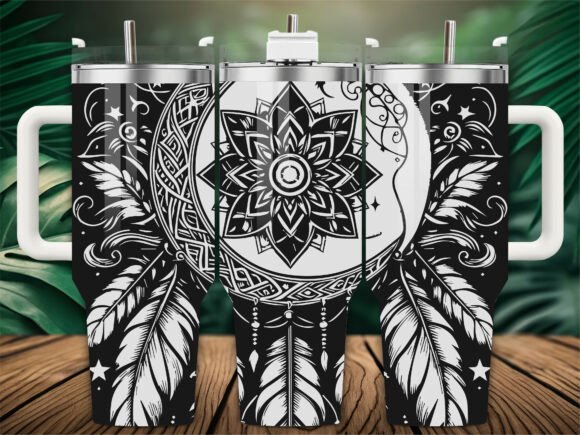
Moon Dreamcatcher carries a soft, spiritual, almost bohemian personality. The crescent moon shape anchors the composition, and the dreamcatcher web inside adds texture without becoming noisy. The feathers hang naturally, and the overall silhouette feels balanced. It is not an overly dense design, which is a relief for embroidery work. The detail level sits somewhere between a clean icon and a decorative illustration. That makes it versatile for apparel, accessories, and home goods.
I can see this design fitting naturally on a sweatshirt pocket, a tote bag, a baby blanket corner, or even as a small embroidered patch for a handmade product. The theme is broad enough to appeal to customers who love astrology, nature-inspired decor, or personalized gifts with meaning. It is the kind of design that can elevate a simple garment into something that feels intentional and giftable.
Because it is sold as a laser SVG for a 40oz tumbler wrap, the original layout is optimized for a curved cylindrical surface. That means the proportions are wider and more horizontal than a typical square or vertical embroidery design. If you plan to adapt this into an embroidery file, you may need to adjust the aspect ratio to fit a standard hoop size. The good news is that the visual components—moon, web, feathers—can be rearranged or scaled without losing their character. That is a sign of a well-constructed graphic.
How Moon Dreamcatcher Performs in Real Embroidery Work
I tested a version of this design adapted for a custom tote bag project, using a medium-weight cotton canvas with a tear-away stabilizer. The satin stitch on the moon outline came out clean, and the fill stitch inside the web held its shape without puckering. The feathers, which I stitched as a combination of satin and running stitch, retained their fluid look. I was careful to keep the stitch density moderate, especially in the web section, to avoid thread breaks or fabric pull.
For a sweatshirt embroidery project, I would recommend a cutaway stabilizer and a lightweight topping to prevent the stitches from sinking into the fleece. The moon shape provides a solid border that frames the design well, so even on softer fabrics, the edges stay crisp. If you are stitching this on a cap or a curved surface like a beanie, reduce the size slightly and check the angle of the feathers. Long, narrow elements can distort on a curve if not adjusted beforehand.
For baby embroidery, such as a onesie or a small blanket, I would size the design down and simplify the web detail. The dreamcatcher web has several small openings that could become lost in a small hoop. A fill stitch with fewer color changes would keep it readable and soft against delicate fabric. As always, test on scrap fabric first, especially when working with stretchy or thin materials.
For embroidered patches, Moon Dreamcatcher works beautifully. The moon shape gives you a clear edge for a merrowed border or a satin stitch finish. You could stitch several patches in different colorways—silver and white for a lunar look, or deep indigo and gold for a boho vibe—and sell them as part of a small shop collection. Patches also allow you to reuse the design across multiple products without re-hooping the same garment.
Where to Be Careful with This Design
No design is perfect for every situation, and Moon Dreamcatcher has a few areas that need attention. The web detail, while beautiful, can become muddy if the stitch density is too high or if the thread colors are too similar to the fabric. I recommend testing it on a light fabric with dark thread, and on a dark fabric with metallic or bright thread, to see which combination gives the best contrast.
If you are working with textured fabric like linen, burlap, or thick fleece, the fine lines in the web may not register clearly. In those cases, I would simplify the web to a few bold strokes or use a thicker satin stitch. The same applies for tiny lettering or decorative accents near the feathers—keep them large enough to read from a reasonable distance.
For products that will be washed frequently, such as kitchen towels or baby items, use a high-quality polyester thread and a firm stabilizer. The moon shape is sturdy, but the feather details could fray or distort over time if the stitch count is too low or the thread is weak. I always recommend a test wash before selling any finished product to a customer.
One more note: if you are adapting this from the original tumbler wrap SVG into an embroidery file, double-check the hoop size and machine compatibility. The original file is a single SVG, which means it was designed for laser engraving, not embroidery. You will need to convert it into a proper embroidery format—PES, DST, or whatever your machine uses—and confirm that the stitch types and density settings match your machine's capabilities. Do not assume the file will stitch correctly without adjustments.
Visual Appeal, Product Value, and Customer Trust
In my experience, designs like Moon Dreamcatcher sell well because they tap into a lifestyle. Customers who buy handmade products are often looking for something that reflects their identity—spiritual, nature-connected, thoughtful. A well-embroidered moon dreamcatcher on a sweatshirt or a tote bag feels personal. It is the kind of item that sparks conversation at a craft fair or gets noticed in an Etsy listing photo.
From a branding perspective, this design can become a signature piece for your small shop. If you use it consistently across different products—patches, apparel, home decor—it builds recognition. Customers start to associate that moon and feather silhouette with your work. That is valuable for any creative entrepreneur.
For digital product sellers, Moon Dreamcatcher works well as a printable mockup or a design asset in a bundle. You can show it on a mockup tumbler, a tote bag, or a sweatshirt, and customers can immediately see how it would look in their own products. The dreamcatcher theme is evergreen, so it will not feel dated after one season.
When it comes to giftability, this design is a strong contender. It works for housewarming gifts, birthday presents, wedding favors, and holiday items. The moon symbol is neutral enough to appeal to a wide range of people, and the dreamcatcher element adds a layer of protection and care that feels meaningful.
Practical Designer Notes Before You Stitch
Before you load this design into your machine and start a production run, here are a few things I always check:
- Test on scrap fabric first. Use the exact fabric and stabilizer you plan to use for the final product. Check the stitch quality on both a light and a dark background.
- Review thread color contrast. The moon shape can blend into light fabrics if the thread is too similar. A metallic or high-contrast thread makes the design pop.
- Check stitch density. The web and feather details should not be too dense. If the file has heavy fill areas, reduce the density slightly to prevent puckering or thread breaks.
- Confirm hoop size. Make sure the design fits comfortably in your hoop with room for stabilizer. If you need to resize, keep the proportions natural.
- Inspect small details. Zoom into the web and feather tips. If any elements are thinner than 1.5mm, they may not stitch cleanly. Widen them if needed.
- Test in black and white. Print a black-and-white version of the design to see the contrast and readability. If it looks confusing in grayscale, it will likely look confusing in thread.
- Check licensing. Since this is a digital file for crafts and graphics, confirm whether you can use it in commercial projects, sell finished products, or include it in digital bundles. Every seller has different terms.
- Use proper stabilizer. For most garments, a medium-weight cutaway stabilizer works best. For patches, a firm tear-away or adhesive stabilizer is ideal.
- Test for washability. Stitch a sample and wash it at least once. Check for thread fraying, fabric puckering, or design distortion.
I also recommend testing the design in both a full color version and a single-color version. Sometimes a monochrome look—white thread on black fabric, for example—can be more striking than multiple colors. It also simplifies production and reduces thread changes, which is a practical advantage for small business owners who stitch in volume.
Who Should Use Moon Dreamcatcher
This design is a solid choice for embroidery designers who work with custom apparel, personalized gifts, and handmade products. It is also useful for Etsy sellers who want to offer something with a consistent theme across multiple product categories. If you run a small shop that focuses on boho, celestial, or nature-inspired items, Moon Dreamcatcher fits right into your existing lineup.
For hobbyists and makers, it is a satisfying project that does not require dozens of color changes or complex stitching. You can finish it in a single session and see immediate results. For creative entrepreneurs, it offers commercial potential as a standalone product or as part of a larger collection.
One scenario I find especially fitting: a custom embroidered tote bag for a client who loves moon symbolism. You stitch Moon Dreamcatcher on the front pocket, use a brown or navy fabric, and add the recipient's name in a small satin stitch below the feathers. The result feels personal, professional, and ready for daily use. That kind of project builds customer trust and repeat orders.
Final Thoughts on Moon Dreamcatcher for Embroidery Use
Moon Dreamcatcher is not a flashy, overcomplicated design. It is restrained, intentional, and adaptable. That is exactly the kind of design I look for when I am planning a new product line or filling a custom order. It gives you room to adjust, to experiment with thread colors and fabric types, and to make it your own without fighting the original layout.
If you are thinking about adding this to your digital embroidery file collection, I recommend treating it as a foundation piece. Test it on different materials, try different stabilizers, and see how it performs with your machine. Once you find the settings that work, you can produce it across multiple products with confidence. Whether you are stitching a single personalized gift or building a small shop inventory, Moon Dreamcatcher offers real value for your craft business.
As always, trust your own testing more than any review. Every machine, fabric, and stabilizer combination behaves differently. But in my experience, this design is worth the effort.